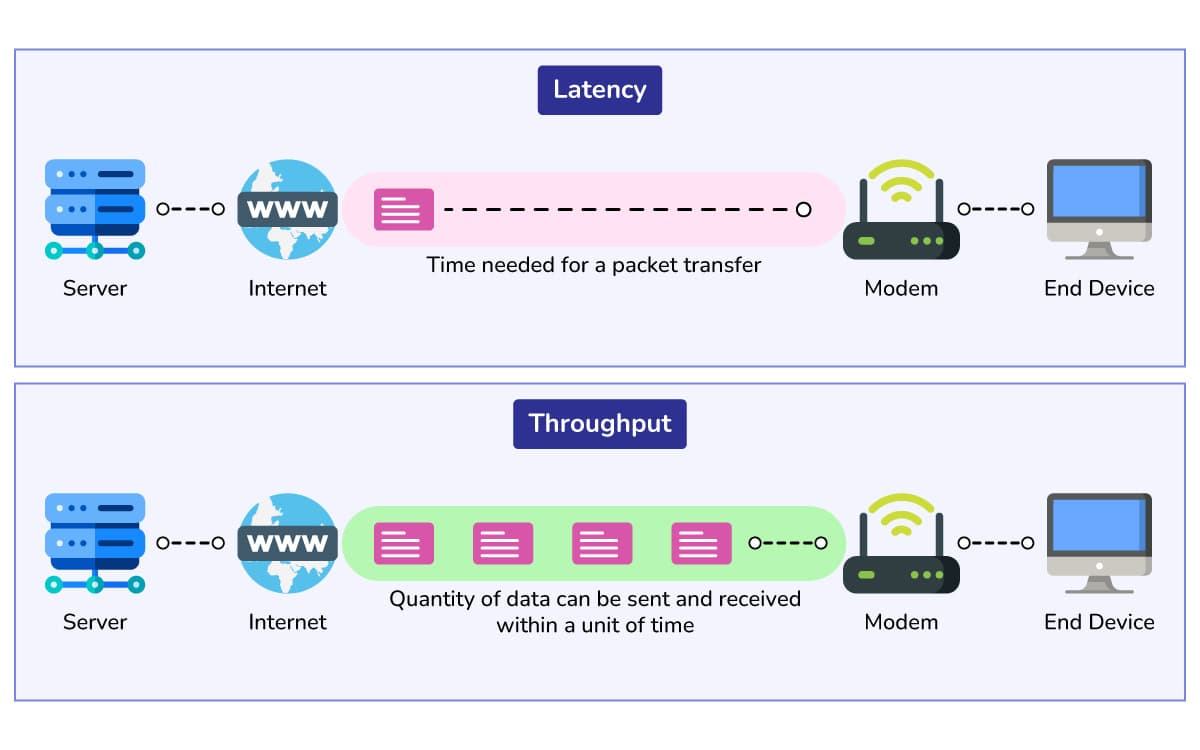

The balance between throughput and latency is crucial for system design, as it directly impacts the user experience and overall performance. Throughput refers to the number of requests a system can handle per second, while latency measures the time it takes for a single request to complete. Finding the optimal balance between these two metrics is essential for ensuring a smooth and efficient system operation.
Background
Historically, system designers have focused on optimizing either throughput or latency, often at the expense of the other. However, with the increasing demand for high-performance and real-time systems, a more nuanced approach is required. The concept of throughput and latency is closely tied to the principles of distributed systems, where multiple components work together to achieve a common goal. Understanding the trade-offs between these two metrics is vital for designing scalable and efficient systems.
Core Concepts
Fundamentals of Throughput and Latency
Throughput
Throughput is typically measured in requests per second (RPS) and is influenced by factors such as server capacity, network bandwidth, and database performance. Increasing throughput can be achieved by adding more resources, such as servers or database instances, but this can also lead to increased latency if not managed properly.
Latency
Latency, on the other hand, is measured in milliseconds (ms) and is affected by factors such as network latency, database query time, and server processing time. Reducing latency can be achieved by optimizing server configuration, using caching mechanisms, and reducing the number of database queries.
Architecture Deep Dive
The architecture of a system plays a critical role in determining its throughput and latency. A well-designed architecture can help balance these two metrics and ensure optimal system performance.
This diagram illustrates a basic architecture consisting of a client, load balancer, server, and database. The load balancer distributes incoming requests across multiple servers, which in turn query the database to retrieve the required data. The response is then sent back to the client through the load balancer.
How It Works
System Operation
The system operates by receiving incoming requests from clients, which are then distributed across multiple servers by the load balancer. Each server processes the request and queries the database to retrieve the required data. The response is then sent back to the client through the load balancer. The system uses a queue-based mechanism to manage incoming requests and ensure that each request is processed in a timely manner.
Implementation Guide
Implementing a system that balances throughput and latency requires careful consideration of several factors, including server capacity, network bandwidth, and database performance. The following code examples illustrate how to implement a basic load balancer and server using Python.
Load Balancer Example
This code example illustrates a basic load balancer that distributes incoming requests across multiple servers using a round-robin algorithm.
Server Example
This code example illustrates a basic server that listens for incoming requests and processes them accordingly.
Performance and Scalability
The performance and scalability of a system are closely tied to its throughput and latency. Increasing throughput can lead to increased latency if not managed properly, while reducing latency can lead to decreased throughput if not optimized correctly. The following table illustrates the trade-offs between different approaches to balancing throughput and latency.
| Approach | Throughput | Latency | Scalability |
|---|---|---|---|
| Increase Server Capacity | High | Low | Medium |
| Optimize Database Queries | Medium | Low | High |
| Implement Caching | High | Low | Medium |
| Use Load Balancing | High | Medium | High |
| Implement Queue-Based Mechanism | Medium | Medium | Medium |
Security and Reliability
The security and reliability of a system are critical components of its overall design. A system that is not secure or reliable can lead to decreased throughput and increased latency, as well as potential data loss or corruption. Implementing security measures such as encryption and access controls, as well as reliability mechanisms such as redundancy and failover, can help ensure the overall security and reliability of the system.
Common Pitfalls
Several common pitfalls can occur when designing a system that balances throughput and latency. These include over-optimizing for one metric at the expense of the other, failing to consider the impact of network latency, and not implementing adequate security and reliability measures. Avoiding these pitfalls requires careful consideration of the system's overall design and a nuanced approach to balancing throughput and latency.
Real-World Use Cases
Several real-world use cases illustrate the importance of balancing throughput and latency. These include e-commerce platforms, social media sites, and real-time analytics systems. In each of these cases, a system that can handle high throughput while maintaining low latency is critical for ensuring a smooth and efficient user experience.
Future Trends
Several future trends are likely to impact the design of systems that balance throughput and latency. These include the increasing use of cloud computing, the rise of edge computing, and the growing importance of real-time analytics. As these trends continue to evolve, system designers will need to adapt and innovate to ensure that their systems can meet the changing demands of users and applications.
Key Takeaways
- Throughput and latency are critical metrics for system design
- Balancing these metrics requires careful consideration of several factors
- A well-designed architecture is essential for optimal system performance
- Security and reliability are critical components of system design
- Avoiding common pitfalls requires careful consideration of the system's overall design