
Background
Introduction to Long Polling
Long polling is a technique used to simulate real-time communication over standard HTTP connections without requiring specialized protocols.
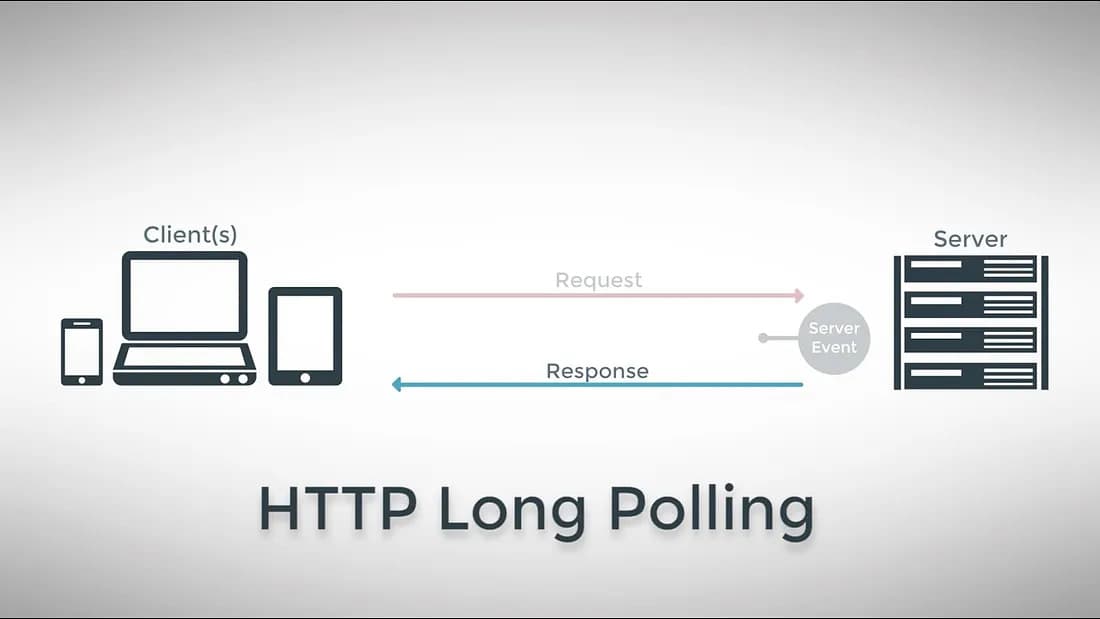
In long polling, the client sends a request to the server, and the server keeps the connection open until:
- New data becomes available
- A timeout occurs
Once the server responds, the client immediately establishes another request, creating the illusion of continuous real-time updates.
Although less efficient than WebSockets, long polling remains useful because it:
- Is relatively simple to implement
- Works through most proxies and firewalls
- Requires no protocol upgrades
- Is compatible with older infrastructure
History and Evolution
Long polling emerged in the early web era to support near real-time applications such as chat systems and notifications.
Before technologies like WebSockets and Server-Sent Events (SSE), long polling was one of the few practical ways to push updates from servers to browsers.
While newer protocols have largely replaced it in high-performance systems, long polling still appears in:
- Legacy applications
- Enterprise environments
- Firewall-restricted networks
- Simpler real-time systems
Advantages
- Easy to Implement: Uses standard HTTP request-response semantics.
- Firewall Friendly: Compatible with most proxies and restrictive networks.
- Broad Compatibility: Works with older browsers and infrastructure.
- No Specialized Protocols: Avoids the complexity of persistent socket management.
Core Concepts
- Request-Response Cycle: The client sends a request and waits for a delayed server response.
- Connection Holding: The server keeps the HTTP request open until data becomes available.
- Timeouts: Connections close after a predefined period if no updates exist.
- Reconnection: Clients immediately reconnect after receiving a response or timeout.
- Polling Loop: The repeated request cycle that simulates real-time communication.
Key Technologies
- Long Polling: HTTP-based pseudo real-time communication.
- WebSockets: Full-duplex persistent communication protocol.
- Server-Sent Events (SSE): Unidirectional server-to-client streaming over HTTP.
Architecture Deep Dive
A long polling architecture generally includes:
- Clients
- Application servers
- Databases or event stores
- Load balancers
- Optional caching layers
Core Components
Client
The client:
- Sends a request
- Waits for updates
- Reconnects immediately after each response
Server
The server:
- Holds incoming requests open
- Monitors for new data
- Responds when updates become available or timeouts occur
Load Balancer
The load balancer distributes requests across multiple application servers to improve scalability and availability.
Server-Side Considerations
Connection Management
Servers must efficiently handle large numbers of concurrent open HTTP connections without exhausting memory or threads.
Data Sources
Updates may originate from:
- Databases
- Message queues
- In-memory event streams
- Distributed caches
Caching
Caching frequently accessed data can reduce backend load and improve response times.
How It Works
Long Polling Request Flow
- The client sends an HTTP request.
- The server keeps the request open while waiting for new data.
- When data becomes available, the server responds immediately.
- The client processes the response.
- The client instantly sends another request.
- If no data arrives before timeout, the server closes the connection and the cycle repeats.
Example Use Case
A chat application uses long polling to deliver near real-time messages:
- Users send messages to the server.
- Recipient clients maintain long polling requests.
- When a message arrives, the server responds to the waiting client immediately.
- The client reconnects and waits for the next update.
Implementation Guide
Implementing long polling requires both server-side and client-side coordination.
High-Level Steps
- Create an endpoint that supports delayed responses.
- Keep requests open until data or timeout conditions occur.
- Reconnect clients automatically after responses.
- Add timeout handling and retry logic.
- Scale infrastructure to support many simultaneous open connections.
Node.js Server Example
This Node.js example creates an HTTP server that delays its response for 10 seconds before returning data to the client.
Performance and Scalability
Long polling introduces scalability challenges because connections remain open for extended periods.
Performance Challenges
- High numbers of concurrent open connections
- Increased memory usage
- Thread or event-loop exhaustion
- Frequent reconnect overhead
- Network resource consumption
Bottlenecks
Server-Side Bottlenecks
Inefficient connection handling can overwhelm servers under heavy load.
Network Bottlenecks
Large volumes of open HTTP connections can strain network infrastructure and load balancers.
Optimization Techniques
- Caching: Reduce backend database queries.
- Load Balancing: Spread requests across multiple nodes.
- Event-Driven Servers: Use asynchronous runtimes such as Node.js or Nginx.
- Connection Pooling: Optimize backend resource usage.
- Efficient Timeouts: Prevent unnecessary resource retention.
Security and Reliability
Long polling systems must account for both persistent connections and repeated reconnection behavior.
Security Concerns
- DDoS Attacks: Attackers can exhaust server connection limits.
- Injection Attacks: Unsanitized inputs can expose backend systems.
- Session Abuse: Long-lived connections may increase attack surface.
- Authentication Expiry: Token refresh handling becomes important during long sessions.
Reliability Concerns
- Timeout Handling: Improper timeout values can create unstable connections.
- Network Interruptions: Temporary outages require automatic reconnection logic.
- Duplicate Events: Reconnection can sometimes produce duplicate updates.
- Connection Leaks: Improper cleanup can exhaust server resources.
Common Pitfalls
- Blocking Server Architectures: Thread-per-request models scale poorly with long polling.
- Improper Timeout Configuration: Extremely short or long timeouts hurt performance.
- Insufficient Load Balancing: Uneven traffic distribution creates hotspots.
- Missing Retry Logic: Clients failing to reconnect correctly lose updates.
- Weak Monitoring: Lack of visibility into connection counts and latency.
Real-World Use Cases
Long polling is commonly used for:
- Chat Applications
- Notification Systems
- Live Sports Scores
- Stock Price Feeds
- Collaborative Applications
- Gaming State Updates
- Operational Dashboards
Future Trends
Several technologies are gradually replacing or augmenting long polling:
- WebSockets: Persistent bidirectional communication.
- Server-Sent Events (SSE): Lightweight server-to-client streaming.
- HTTP/2 and HTTP/3: Improved multiplexing and connection efficiency.
- Edge Computing: Lower latency for real-time communication.
- Managed Real-Time Platforms: Cloud-native push infrastructure services.
Key Takeaways
- Long polling enables near real-time communication using plain HTTP.
- It is easier to deploy than WebSockets in restrictive network environments.
- Scalability depends heavily on efficient connection handling.
- Load balancing and asynchronous servers are critical for performance.
- Security, monitoring, and timeout management are essential for reliability.
- Modern systems increasingly favor WebSockets or SSE for large-scale real-time applications.