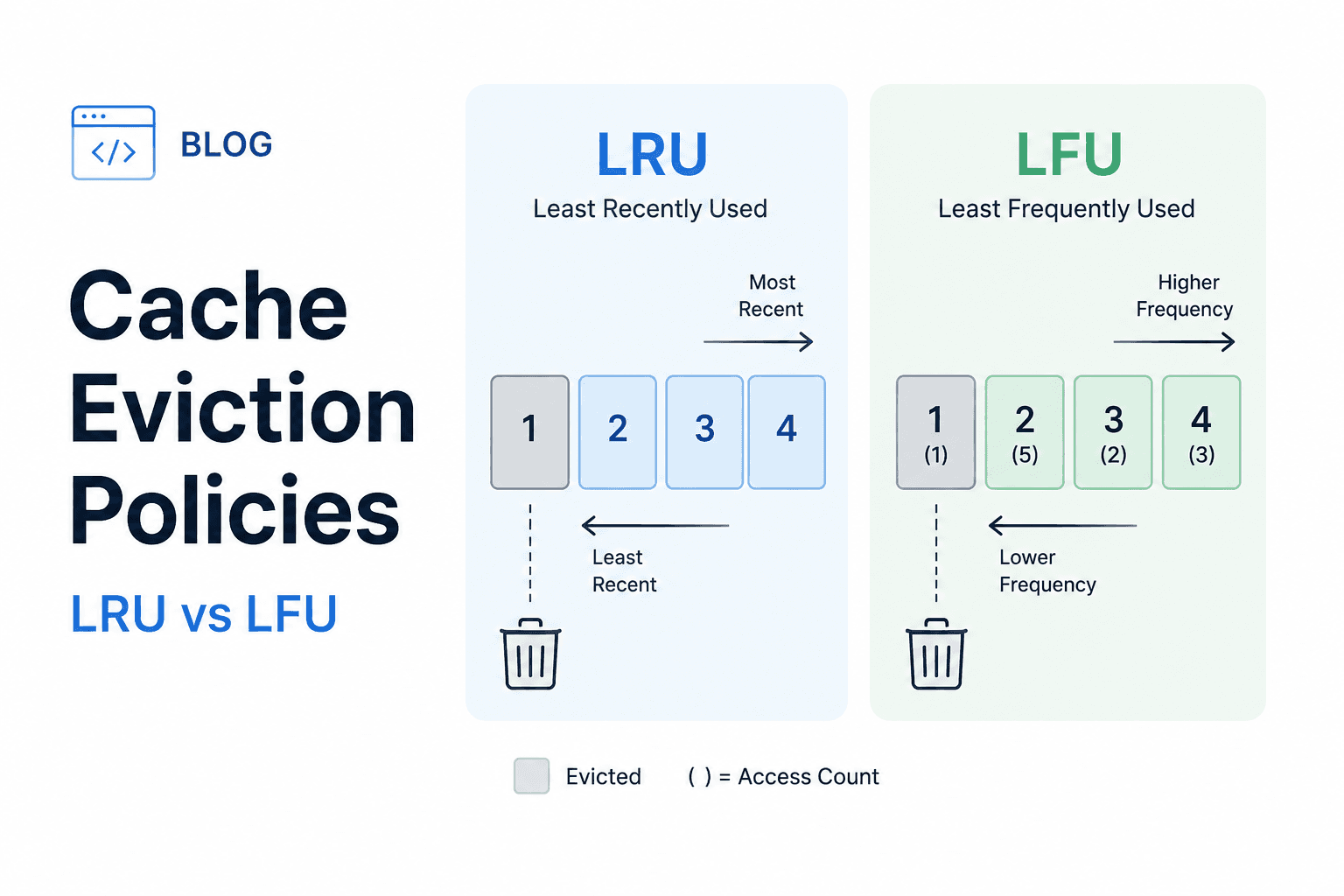

Cache eviction policies are crucial in managing cache space efficiently, and LRU and LFU are two widely used strategies. LRU evicts items that have not been accessed recently, while LFU evicts items that are rarely accessed. The choice of eviction policy depends on the specific use case and requirements of the system. Effective cache management can significantly improve system performance, reduce latency, and increase throughput. In this context, understanding the strengths and weaknesses of different cache eviction policies is essential for designing and optimizing high-performance systems.
Background
The concept of caching dates back to the early days of computing, where it was used to improve the performance of mainframe computers. Over time, caching has evolved to become a critical component of modern computing systems, from web browsers to databases. The limited size of cache memory necessitates the use of eviction policies to decide which items to remove when the cache is full. Historical development of cache eviction policies has led to the creation of various algorithms, including LRU, LFU, FIFO, and Random. Each policy has its strengths and weaknesses, and the choice of policy depends on the specific requirements of the system.
Core Concepts
Cache Eviction Policies
LRU is based on the idea that recently accessed items are more likely to be accessed again. It uses a time stamp to track the last access time of each item and evicts the item with the oldest time stamp. LFU, on the other hand, evicts items that are rarely accessed, focusing on long-term popularity. It uses a counter to track the access frequency of each item and evicts the item with the lowest frequency. Other policies, such as FIFO and Random, are also used in certain scenarios.
Key Considerations
- Cache size: The size of the cache has a significant impact on the performance of the system. A larger cache can store more items, but it also increases the overhead of cache management.
- Item size: The size of each item in the cache can vary significantly, and this affects the overall cache capacity.
- Access patterns: The access patterns of the system can significantly impact the effectiveness of the cache eviction policy.
Architecture Deep Dive
A typical caching system consists of a cache layer that sits between the application and the underlying storage. The cache layer is responsible for managing the cache and implementing the eviction policy. The cache controller is the component that manages the cache and makes decisions about which items to evict. The cache store is the component that stores the actual cache items.
Distributed Systems
In a distributed system, caching is even more critical, as it can help reduce the latency and improve the performance of the system. However, implementing a cache eviction policy in a distributed system can be challenging, as it requires coordination between multiple nodes. Distributed cache protocols, such as Memcached and Redis, provide a way to implement caching in a distributed system.
How It Works
Cache Operation
When a request is made to the system, the cache layer checks if the requested item is in the cache. If it is, the cache layer returns the item directly. If not, the cache layer retrieves the item from the underlying storage and stores it in the cache. When the cache is full, the cache controller uses the eviction policy to decide which item to evict.
Eviction Policy
The eviction policy is used to decide which item to evict when the cache is full. The LRU policy evicts the item that has not been accessed recently, while the LFU policy evicts the item that is rarely accessed.
Implementation Guide
Implementing a cache eviction policy requires careful consideration of the system requirements and constraints. The choice of policy depends on the specific use case and requirements of the system. Code examples can help illustrate the implementation of different cache eviction policies.
LRU Cache Implementation
This example illustrates the implementation of an LRU cache using an OrderedDict in Python. The get method retrieves an item from the cache and updates its position, while the put method adds an item to the cache and evicts the least recently used item if the cache is full.
Performance and Scalability
Cache Hit Ratio
The cache hit ratio is a critical metric that measures the effectiveness of the cache. A higher cache hit ratio indicates that the cache is effective in reducing the number of requests to the underlying storage. Cache size and eviction policy can significantly impact the cache hit ratio.
Scalability
Scalability is critical in modern systems, and caching can help improve scalability by reducing the load on the underlying storage. Distributed caching can help improve scalability by providing a way to cache items across multiple nodes.
Security and Reliability
Cache security is critical, as it can help prevent unauthorized access to sensitive data. Encryption and access control can help improve cache security.
Reliability
Reliability is also critical, as it can help ensure that the cache is always available. Redundancy and failover can help improve cache reliability.
Common Pitfalls
Cache Thrashing
Cache thrashing occurs when the cache is constantly evicting and re-adding items, leading to poor performance. Cache size and eviction policy can help mitigate cache thrashing.
Cache Invalidation
Cache invalidation occurs when the cache becomes outdated, leading to incorrect results. Cache expiration and cache invalidation can help mitigate cache invalidation.
Real-World Use Cases
Web Browsers
Web browsers use caching to improve performance by reducing the number of requests to web servers. LRU and LFU are commonly used eviction policies in web browsers.
Databases
Databases use caching to improve performance by reducing the number of requests to disk storage. LRU and LFU are commonly used eviction policies in databases.
Future Trends
Artificial Intelligence
Artificial intelligence can help improve cache performance by predicting access patterns and optimizing cache eviction policies.
Edge Computing
Edge computing can help improve cache performance by reducing latency and improving responsiveness.
Key Takeaways
- Cache eviction policies are critical in managing cache space efficiently
- LRU and LFU are two widely used cache eviction policies
- Cache size and eviction policy can significantly impact cache performance
- Distributed caching can help improve scalability and performance
- Cache security and reliability are critical in modern systems