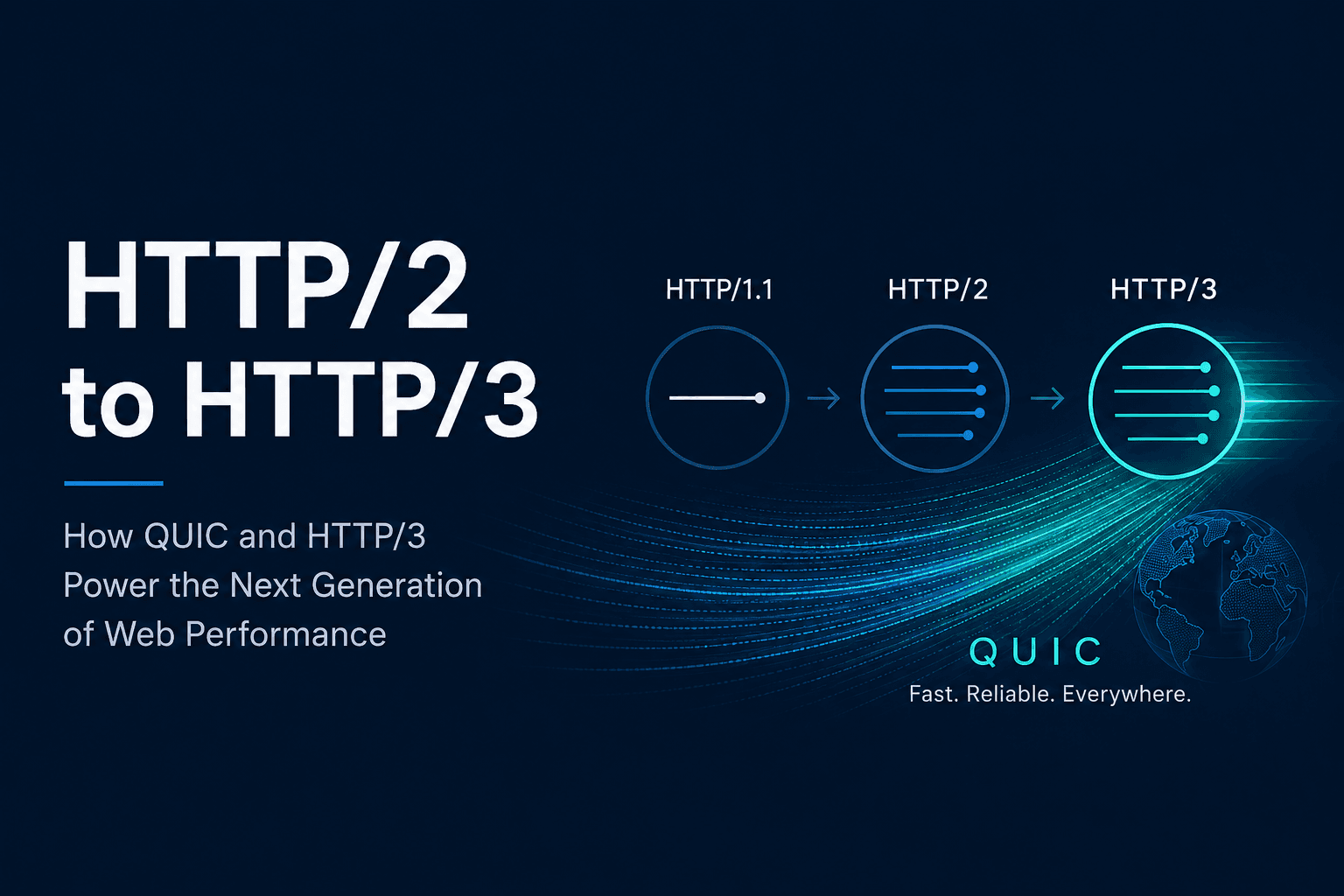

The evolution of the Hypertext Transfer Protocol (HTTP) has led to significant improvements in web performance, with HTTP/2 introducing multiplexing, header compression, and server push, and HTTP/3 building upon these advancements by leveraging the QUIC transport protocol to further reduce latency and enhance reliability, particularly over unreliable networks.
Background
The HTTP/1.1 protocol, which had been the backbone of the web for decades, faced limitations in terms of performance, especially with the increasing complexity of web applications and the proliferation of mobile devices. The need for a more efficient and scalable protocol led to the development of HTTP/2, which was standardized in 2015. HTTP/2 introduced several key features, including multiplexing, which allows multiple requests to share the same TCP connection, reducing the overhead associated with connection setup and teardown. Additionally, HTTP/2 brought header compression, reducing the amount of data that needs to be transmitted, and server push, enabling servers to proactively send resources to clients. However, despite these improvements, HTTP/2 still relies on TCP, which can lead to performance issues, particularly in environments with high latency or packet loss. This limitation paved the way for the development of HTTP/3, which utilizes the QUIC transport protocol, built on top of UDP, to address these challenges and provide even better performance and reliability.
Core Concepts
Introduction to HTTP/2 and HTTP/3
Multiplexing and Header Compression
Multiplexing allows multiple requests to share the same connection, reducing the overhead of connection setup and teardown. Header compression reduces the amount of data that needs to be transmitted.
Server Push
Server push enables servers to proactively send resources to clients, reducing the number of requests needed to load a page.
QUIC Transport Protocol
QUIC is a transport protocol built on top of UDP, designed to provide low-latency, multiplexed connections. It includes features such as connection migration, 0-RTT connection establishment, and improved loss recovery.
Architecture Deep Dive
The architecture of HTTP/3 is built around the QUIC transport protocol, which provides a foundation for low-latency, multiplexed connections. QUIC connections are established using a 0-RTT handshake, which allows data to be sent immediately, without waiting for the handshake to complete. Once established, QUIC connections can be used to send multiple streams of data, each of which can be prioritized and managed independently. The use of UDP as the underlying transport protocol allows QUIC to avoid the head-of-line blocking issues that can occur with TCP.
Trade-Offs
While QUIC provides several advantages over TCP, it also introduces some trade-offs. For example, the use of UDP means that QUIC must implement its own reliability mechanisms, which can add complexity and overhead. Additionally, the 0-RTT handshake can be vulnerable to replay attacks, which must be mitigated through the use of cryptographic techniques.
How It Works
Connection Establishment
The establishment of a QUIC connection involves a 0-RTT handshake, which allows data to be sent immediately, without waiting for the handshake to complete. This is achieved through the use of a pre-shared key, which is used to authenticate the connection and establish the initial encryption parameters.
Data Transmission
Once the connection is established, data can be sent over the connection using multiple streams, each of which can be prioritized and managed independently. The use of UDP as the underlying transport protocol allows QUIC to avoid the head-of-line blocking issues that can occur with TCP.
Connection Migration
QUIC connections can be migrated to a new network path, without interrupting the connection. This is achieved through the use of a connection ID, which is used to identify the connection and allow it to be migrated to a new path.
Implementation Guide
Implementing HTTP/3 requires a deep understanding of the QUIC transport protocol and its underlying architecture. This includes implementing the 0-RTT handshake, managing multiple streams of data, and mitigating potential security vulnerabilities.
QUIC Connection Establishment
This example demonstrates the establishment of a QUIC connection using the quic library in Python. The connect method is used to establish the connection, and the print statement is used to display the result.
Performance and Scalability
The performance and scalability of HTTP/3 are significantly improved compared to HTTP/2, due to the use of the QUIC transport protocol. QUIC provides low-latency, multiplexed connections, which allow multiple requests to be sent over a single connection, reducing the overhead associated with connection setup and teardown. Additionally, the use of UDP as the underlying transport protocol allows QUIC to avoid the head-of-line blocking issues that can occur with TCP.
Security and Reliability
The security and reliability of HTTP/3 are critical considerations, due to the use of the QUIC transport protocol. QUIC provides several security features, including encryption, authentication, and replay protection. However, the use of UDP as the underlying transport protocol also introduces some security vulnerabilities, such as the potential for replay attacks. To mitigate these vulnerabilities, HTTP/3 implementations must include robust security measures, such as cryptographic techniques and secure key exchange protocols.
Common Pitfalls
Several common pitfalls can occur when implementing HTTP/3, including the use of inadequate security measures, the failure to properly manage multiple streams of data, and the lack of support for connection migration. To avoid these pitfalls, implementers must carefully consider the security and reliability requirements of their application, and ensure that their implementation includes robust security measures and proper management of multiple streams of data.
Real-World Use Cases
HTTP/3 has several real-world use cases, including the improvement of web performance, the enhancement of mobile networks, and the support of IoT applications. For example, HTTP/3 can be used to improve the performance of web applications, by reducing the latency and overhead associated with connection setup and teardown. Additionally, HTTP/3 can be used to enhance the performance of mobile networks, by providing low-latency, multiplexed connections that can support multiple streams of data.
Future Trends
The future of HTTP/3 is likely to involve the continued evolution of the QUIC transport protocol, as well as the development of new features and applications that take advantage of its capabilities. For example, the use of HTTP/3 in IoT applications is likely to become more prevalent, as the need for low-latency, multiplexed connections becomes more critical. Additionally, the development of new security features and protocols, such as quantum-resistant cryptography, is likely to play a critical role in the future of HTTP/3.
Key Takeaways
- HTTP/3 provides low-latency, multiplexed connections, using the QUIC transport protocol
- QUIC provides several security features, including encryption, authentication, and replay protection
- The use of UDP as the underlying transport protocol introduces some security vulnerabilities, which must be mitigated through the use of cryptographic techniques
- HTTP/3 has several real-world use cases, including the improvement of web performance, the enhancement of mobile networks, and the support of IoT applications
- The future of HTTP/3 is likely to involve the continued evolution of the QUIC transport protocol, as well as the development of new features and applications that take advantage of its capabilities