
Background
Introduction to Distributed Systems
Distributed systems are collections of independent computers that work together and appear as a single cohesive system to users.
They are designed to provide:
- Scalability
- High availability
- Fault tolerance
- Geographic distribution
- Parallel processing
As distributed systems grow in size and complexity, maintaining consistency and reliability across nodes becomes increasingly difficult.
The CAP Theorem
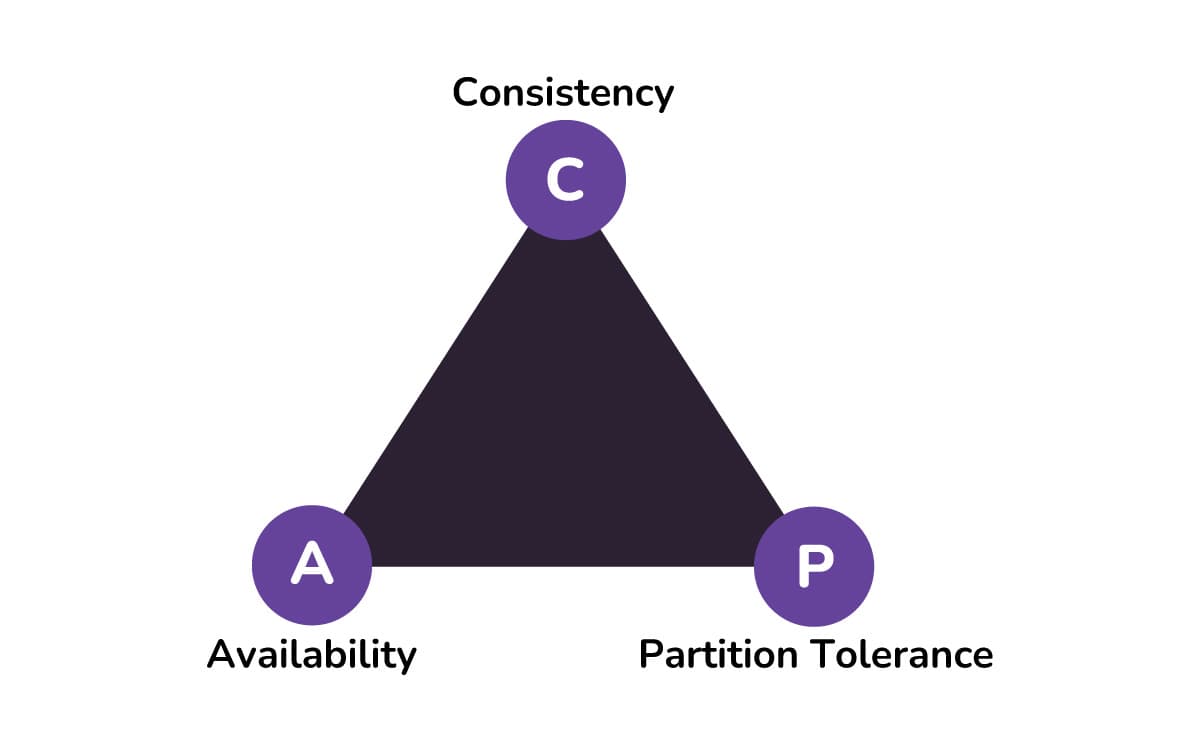
The CAP Theorem, also known as Brewer’s Theorem, states that a distributed system cannot simultaneously guarantee all three of the following properties during a network partition:
- Consistency (C): All nodes see the same data at the same time.
- Availability (A): Every request receives a response, even during failures.
- Partition Tolerance (P): The system continues operating despite network partitions between nodes.
In practice, partition tolerance is mandatory in distributed environments, meaning systems must typically choose between stronger consistency or higher availability during failures.
Core Concepts
Consistency Models
Distributed systems use different consistency models depending on application requirements.
Strong Consistency
All clients immediately see the latest committed value across all nodes.
Weak Consistency
Nodes may temporarily observe different values before synchronization occurs.
Eventual Consistency
Nodes eventually converge to the same value over time, without guarantees about when synchronization completes.
Availability
Availability ensures the system continues responding to requests even when components fail.
Highly available systems prioritize uptime and responsiveness, sometimes at the cost of returning stale data.
Partition Tolerance
Partition tolerance allows systems to continue functioning despite communication failures between nodes or regions.
Because network failures are unavoidable in distributed systems, partition tolerance is generally considered non-negotiable.
Architecture Deep Dive
Designing distributed systems requires balancing trade-offs between consistency, availability, and fault tolerance.
Data Replication
Replicating data across multiple nodes improves:
- Fault tolerance
- Availability
- Read scalability
However, replication increases synchronization complexity and consistency challenges.
Data Partitioning
Partitioning distributes data across multiple nodes or shards to improve scalability and throughput.
Benefits include:
- Horizontal scalability
- Reduced node load
- Parallel processing
Trade-offs include:
- Cross-partition coordination complexity
- Distributed transaction challenges
Conflict Resolution
Distributed systems often require strategies for resolving conflicting updates, including:
- Last writer wins
- Vector clocks
- Multi-version concurrency control (MVCC)
- Operational transforms
- CRDTs (Conflict-Free Replicated Data Types)
Distributed System Architectures
Master-Slave Architecture
A central master node handles writes and replicates changes to follower nodes.
Advantages:
- Simpler consistency management
- Easier operational control
Disadvantages:
- Potential single point of failure
- Limited write scalability
Peer-to-Peer Architecture
All nodes participate equally and can both read and write data.
Advantages:
- Better fault tolerance
- Improved scalability
Disadvantages:
- More complex conflict resolution
- Harder consistency coordination
How It Works
CAP Trade-Offs in Practice
CA Systems (Consistency + Availability)
These systems prioritize consistency and availability but struggle during network partitions.
They may become unavailable when partitions occur to preserve consistency.
CP Systems (Consistency + Partition Tolerance)
These systems preserve consistency during partitions but may reject requests or become partially unavailable.
Examples include strongly consistent distributed databases.
AP Systems (Availability + Partition Tolerance)
These systems continue serving requests during partitions, even if some responses contain stale data.
Eventually consistent NoSQL systems commonly follow this model.
Implementation Guide
Building distributed systems requires careful selection of consistency models and synchronization strategies.
High-Level Implementation Considerations
- Choose an appropriate consistency model.
- Implement replication and partitioning strategies.
- Handle network failures gracefully.
- Design conflict resolution mechanisms.
- Add observability, retries, and monitoring.
Example: Distributed Key-Value Store
This example demonstrates a simple distributed key-value store using Redis. The system supports storing and retrieving values across distributed infrastructure.
Performance and Scalability
Distributed systems achieve scalability through horizontal expansion and workload distribution.
Performance Optimization Techniques
Data Partitioning
Partitioning spreads workloads across multiple nodes to improve throughput.
Load Balancing
Traffic distribution reduces hotspots and improves responsiveness.
Caching
Caching frequently accessed data minimizes expensive backend operations.
Scalability Approaches
Horizontal Scaling
Adding more nodes increases system capacity and fault tolerance.
Vertical Scaling
Increasing CPU, memory, or storage on existing nodes improves local performance but has practical hardware limits.
Security and Reliability
Distributed systems require robust security and operational resilience.
Security Considerations
- Authentication: Verifying users and services.
- Authorization: Enforcing access control policies.
- Encryption: Protecting data in transit and at rest.
- Secrets Management: Securing credentials and tokens.
- Audit Logging: Tracking sensitive operations.
Reliability Considerations
Fault Tolerance
Systems should detect failures and recover automatically.
Redundancy
Duplicating critical components improves resilience during outages.
Disaster Recovery
Replication and backups reduce the impact of catastrophic failures.
Common Pitfalls
- Inconsistent Data: Weak synchronization can produce conflicting state.
- Availability Failures: Poor failover handling causes outages.
- Improper Partition Handling: Network failures may corrupt or isolate data.
- Overcomplicated Coordination: Excessive synchronization harms scalability.
- Ignoring Latency: Geographic distribution introduces network delays.
Real-World Use Cases
Distributed systems power many large-scale applications, including:
- Social media platforms
- E-commerce systems
- Cloud computing infrastructure
- Global databases
- Streaming services
- Distributed analytics platforms
- Multiplayer gaming systems
Future Trends
Emerging trends in distributed systems include:
- Edge Computing: Moving compute closer to users.
- Serverless Platforms: Abstracting infrastructure management.
- AI-Assisted Operations: Automating scaling and failure recovery.
- Geo-Distributed Databases: Improving global latency and resilience.
- Decentralized Systems: Expanding peer-to-peer and blockchain architectures.
Key Takeaways
- The CAP Theorem defines the fundamental trade-offs in distributed systems.
- Partition tolerance is essential in real-world distributed environments.
- Systems must balance consistency and availability based on application needs.
- Replication, partitioning, and caching improve scalability and resilience.
- Security and fault tolerance are critical for production-grade distributed systems.
- Modern architectures increasingly prioritize scalability, automation, and geographic distribution.