
Heartbeats in Distributed Systems
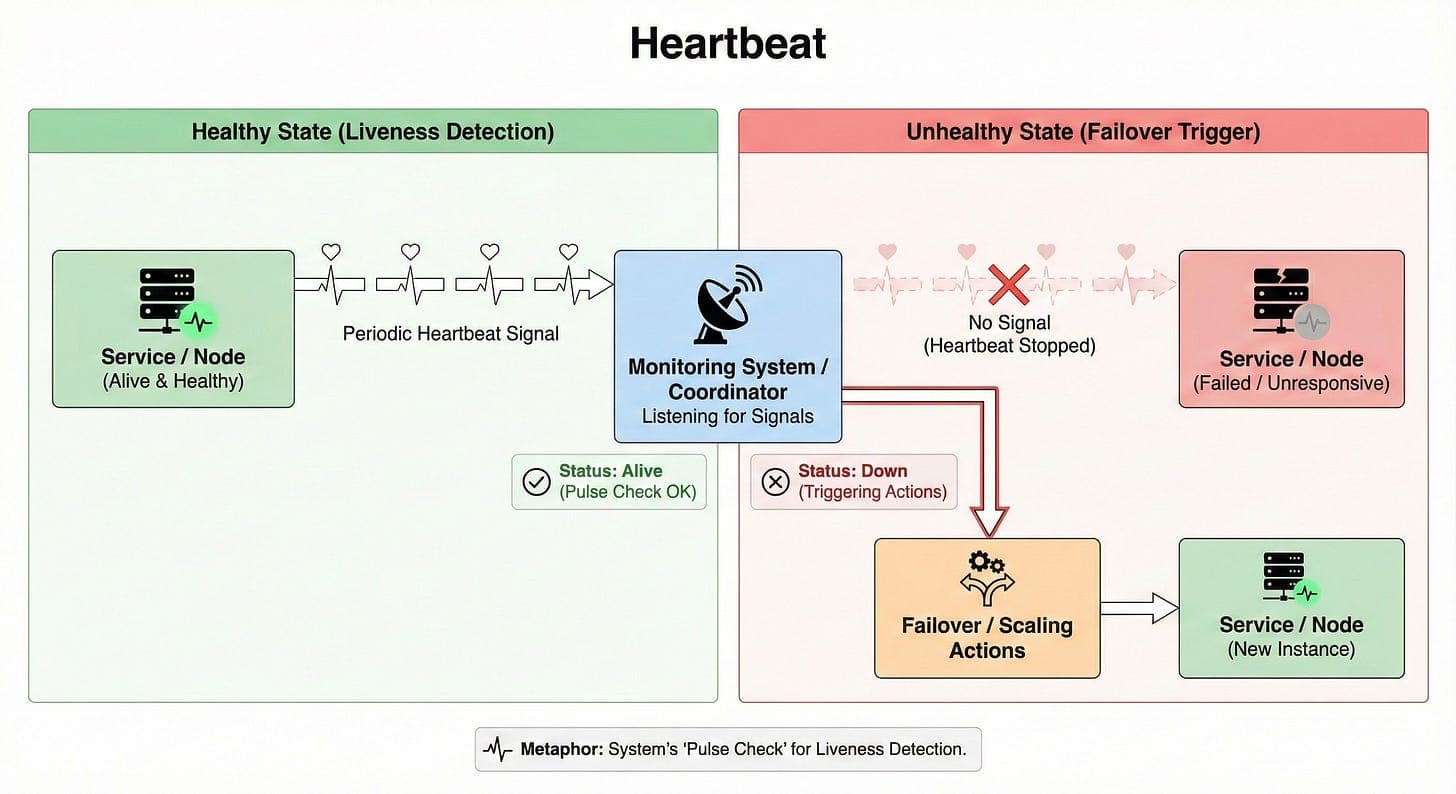
Heartbeats are periodic signals sent by services or nodes to indicate their liveness and health. This post explores heartbeat concepts, architecture, implementation, scalability, and reliability in distributed systems.
Background
History and Evolution
The concept of heartbeats has existed for decades, beginning in mainframe systems and early network protocols. With the rise of distributed systems and cloud computing, heartbeats became a core component of modern infrastructure.
Why Heartbeats Matter
Heartbeats help distributed systems detect node failures, trigger failover mechanisms, and maintain overall system availability and reliability.
Core Concepts
Definition and Purpose
A heartbeat is a periodic signal sent by a node or service to indicate that it is alive and functioning correctly.
Types of Heartbeats
There are two primary approaches:
- Push-based: Nodes periodically send status updates
- Pull-based: Monitoring systems periodically query nodes
Protocols and Formats
Heartbeat communication may use protocols such as TCP, UDP, or HTTP, with formats ranging from simple binary packets to structured JSON or XML payloads.
Architecture
High-Level Design
A heartbeat system generally includes:
- Nodes
- Monitoring systems
- Coordinators
Nodes emit heartbeats, monitoring systems detect failures, and coordinators trigger recovery actions.
Node Side
Nodes send periodic heartbeat signals using timer-based or event-driven mechanisms.
Monitoring Side
Monitoring systems receive and process heartbeat messages using sockets, queues, or event processors.
How It Works
Heartbeat Transmission
Nodes periodically send heartbeat messages using a predefined protocol and format.
Failure Detection
If a heartbeat is not received within a configured timeout window, the node is marked as failed.
Recovery Actions
Recovery mechanisms may include:
- Node replacement
- Load redistribution
- System reconfiguration
Implementation
Example Node Implementation
This example demonstrates a simple UDP heartbeat sender written in Python.
Performance and Scalability
Performance Considerations
Important factors include:
- Network latency
- Packet loss
- Node overhead
Scalability Considerations
Large-scale systems require attention to:
- Horizontal scaling
- Vertical scaling
- Load balancing
Security and Reliability
Security
Heartbeat systems should consider:
- Authentication
- Authorization
- Encryption
Reliability
Reliable heartbeat systems require:
- Fault tolerance
- Error detection
- Recovery mechanisms
Common Pitfalls
Common issues include:
- Incorrect configuration
- Insufficient testing
- Poor monitoring
Real-World Use Cases
Heartbeat systems are widely used in:
- Cloud computing
- Distributed databases
- IoT systems
Future Trends
Emerging trends include:
- Artificial intelligence
- Machine learning
- Edge computing
Key Takeaways
- Heartbeats are essential for distributed system reliability
- Failure detection depends on robust monitoring
- Scalability and security are critical design considerations
- Proper configuration and testing are essential